
5 Tips for Matching Kitchen Tile to Countertops
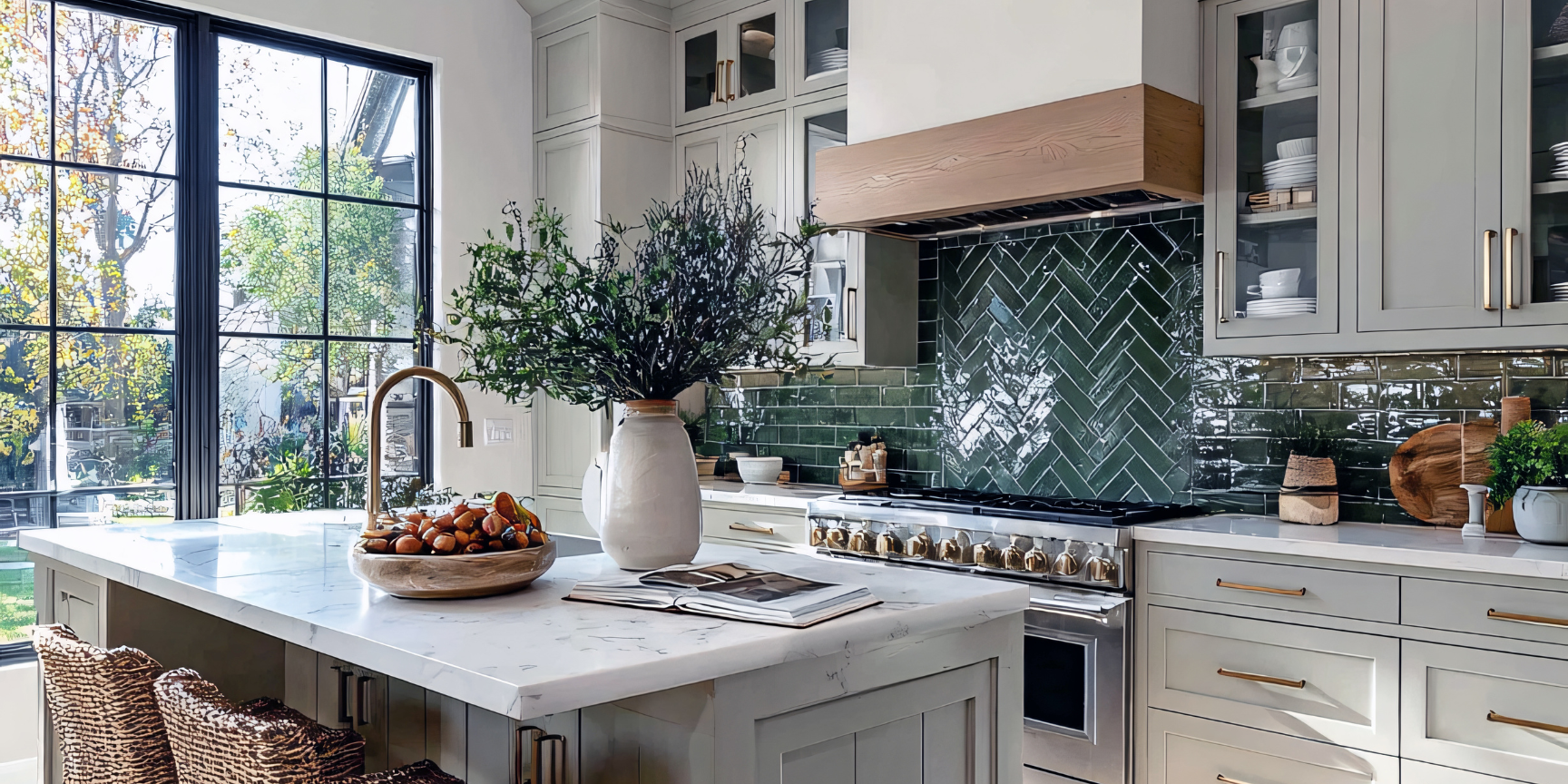
Choosing a kitchen tile that complements your countertops creates a cohesive look that makes your space feel expansive and inviting. Thoughtful coordination creates a sense of balance and timelessness, but it can be tricky to find the right match.
Here are five ways to guarantee your kitchen tile blends beautifully with your countertops:
Start with your countertop as the anchor
Choose timeless materials
Keep patterns and movement in balance
Work with undertones and a simple color palette
Focus on classic shapes, sizes, and layouts
Matching Kitchen Tile to Countertops
When matching kitchen tile to countertops, start with the counter. Your countertop is the anchor that defines your kitchen’s style and color palette. Choose timeless, durable materials and balance patterns so one surface stands out. Keep undertones consistent, use a simple color scheme, and favor classic shapes and layouts for a cohesive, lasting design.
1. Start with your countertop as the anchor
Kitchen countertops are a cornerstone of any remodel and should almost always be chosen before other design elements. Countertops visually dominate the kitchen’s horizontal surfaces, and they’re far more difficult and disruptive to replace than tile. This makes the countertop the logical starting point for all other finish decisions.
Once the countertop is in place, it becomes the anchor surface, setting the tone for the rest of the room with its:
Base color
Undertones
Veining
Pattern
When matching kitchen tile to countertops, tile should then be selected to complement—not compete with—those features. This ensures that the space feels cohesive rather than busy.
For example, a subtly veined marble or quartz countertop looks timeless and elegant when paired with a quiet, classic subway tile in a coordinating white, cream, or soft gray. It echoes the stone’s veining without fighting for attention.
2. Choose timeless materials
When matching countertops and kitchen tile, we recommend choosing timeless materials. These surfaces define the look and feel of your kitchen for decades, not just a few seasons.
Prioritize durable, classic options like marble, as well as:
Granite with soft movement
Porcelain that mimics natural stone
Quality ceramics in simple finishes
These options create a calm, cohesive backdrop that works with changing paint colors, hardware, and decor over time.
Marble, in particular, is often considered a “forever material” thanks to its soft, neutral veining and elegant character. It pairs beautifully with understated tile, allowing the stone’s natural pattern to shine without overwhelming the space. A honed marble countertop beside a simple ceramic subway tile instantly feels upscale and enduring.
In contrast, highly graphic, novelty tiles or extreme colors can quickly lock your kitchen renovation into a specific era and feel dated within a few years. Those bolder choices are best used sparingly—if at all—so your investment continues to look current and sophisticated long term.
3. Keep patterns and movement in balance
Keeping patterns and movement in balance when matching kitchen tile to countertops creates a calm, high‑end look that will age well. A helpful guideline is the one-star, one-support concept:
If the countertop has bold veining or busy speckles, the tile should be simple
If the tile has a strong pattern, keep the countertop quiet
In other words, one of them is the “star” of your kitchen while the other supports it. This prevents the eye from jumping around and makes the room feel more thoughtfully designed.
For example, a busy granite or dramatic marble slab looks sophisticated when paired with plain ceramic or porcelain tile in a straightforward layout, allowing the stone to be the star. On the other hand, a classic herringbone or mosaic tile pattern really shines when set against a solid or subtly veined countertop, which acts as a supporting player.
Avoiding competing patterns in this way creates a balanced, timeless kitchen that still feels interesting without tipping into cluttered or overwhelming.
4. Work with undertones and a simple color palette
Rather than being busy or mismatched, working with undertones and a simple color palette when matching kitchen tile with countertops keeps the kitchen feeling calm, cohesive, and luxurious. A good rule of thumb is to limit the palette to two to three main colors across kitchen cabinets, countertops, and tile.
You can use the countertop as the guide for everything else. Undertones are the subtle “temperature” of a color. Warm tones lean toward yellow, beige, or cream, while cool tones lean toward blue, gray, or crisp white. Everything naturally looks coordinated when you repeat undertones.
Pair warm beiges and creams with earthy stones, and cooler grays and whites with gray‑veined marble or quartz, so nothing clashes. To get this right, take practical steps before you commit. Gather samples of your countertop, tile, and cabinet finish and view them together in your actual kitchen. Do this in natural daylight and under your evening lighting.
This simple test reveals clashing undertones early and prevents expensive regrets later.
5. Focus on classic shapes, sizes, and layouts
Focusing on classic shapes, sizes, and layouts when matching kitchen tiles to countertops ensures a timeless design that won't feel dated in a few years. Enduring shapes and patterns like rectangles, simple large-format floor tiles, and balanced mosaics in stone or neutral tones create clean lines that complement any countertop without overwhelming it.
Classic layouts outlast heavily stylized patterns or unusual shapes that can quickly feel trendy and then outdated. These proven arrangements provide subtle interest while keeping the focus on your countertop's natural beauty.
Small details like grout color also refine the look without chasing fads. For example, tone-on-tone grout blends seamlessly for a modern softness, while high-contrast grout adds crisp definition. This approach delivers a sophisticated, long-lasting kitchen.
Choose Forks River Construction for Your Kitchen Renovation
Forks River Construction stands out for kitchen renovations in Knoxville, TN, because we specialize in custom designs, restorations, and finishes that match your lifestyle and your home's character. With a dedicated project manager guiding every step, our team prioritizes:
Communication
Client education
Minimal disruption
Our process ensures timeless appeal for resale, exclusive access to top-tier cabinetry through Keystone Kitchens, and handling of local permits.
Whether you’re just exploring your options or ready to begin, get in touch with Forks River Construction’s experts. You can contact us online or call us at 865-316-6692. For a decision this big, talk with the design experts at Forks River who think about this every day.